
Entering the bye week, Penn State found itself winless through four Big Ten games and severely lacking an identity in the run game.
The Nittany Lions’ stable of running backs had failed to produce a run of 10 or more yards, and the best performance from the bunch was a 67-yard showing by James Peoples against Wisconsin.
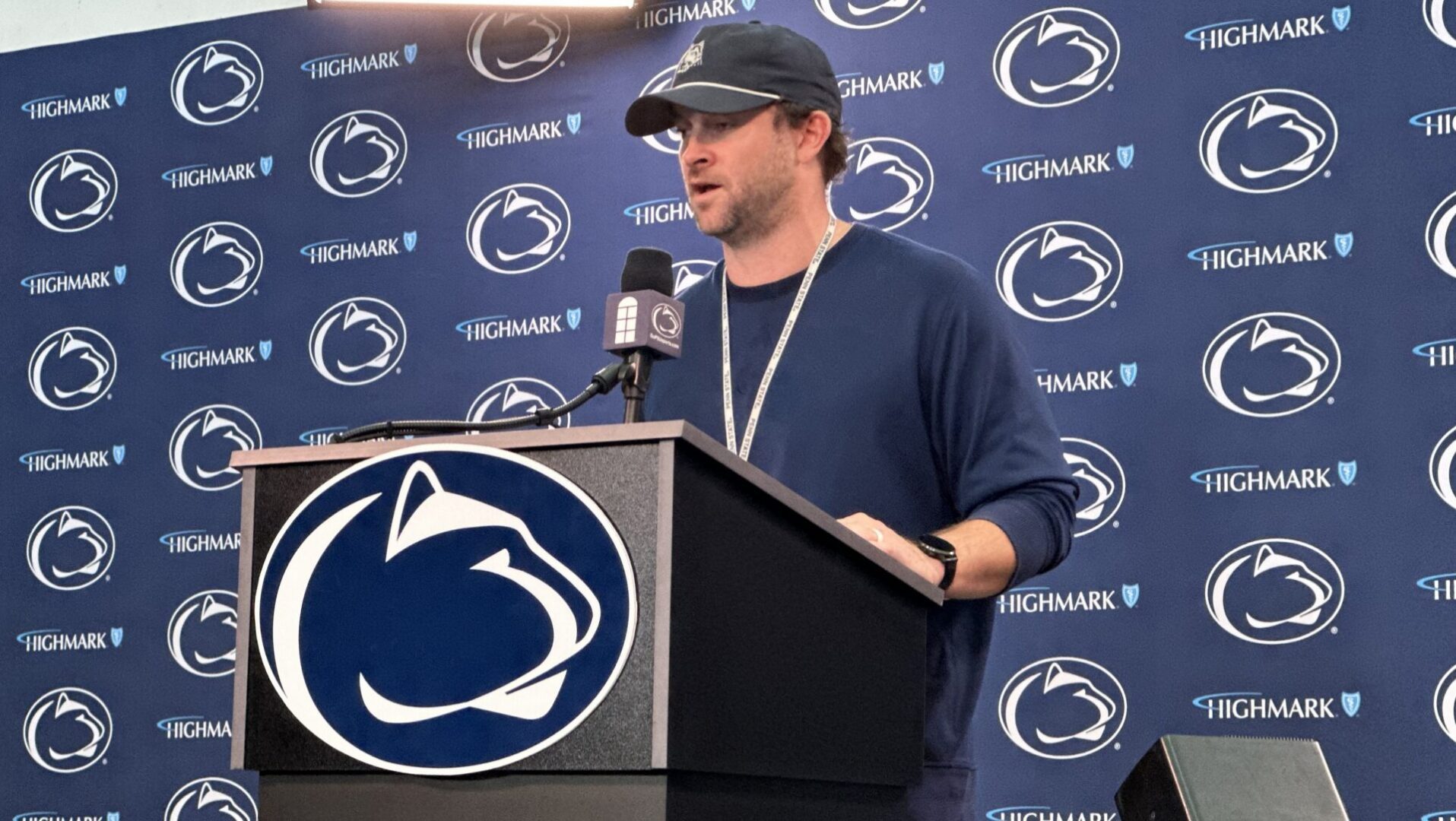
“When you’re not winning here and you’re not living up to the standard, you feel like you’re letting a lot more people down than just the, you know, the players, the coaches,” offensive coordinator Taylor Mouser said Tuesday. “The alumni here, like those people built a standard here that you have to live up to. And when you don’t do it, you feel like you’re letting everybody down.”
After averaging just 3.3 yards per carry against the Badgers, Penn State went three consecutive games at just 2.2 yards per rush against Northwestern, USC and Michigan. That flipped against Purdue last Saturday, when the Nittany Lions gashed the Boilermakers for 269 yards on 51 carries for an average of 5.3.
“It was about simplifying things and being able to let our guys play fast,” Mouser said. “And on Tuesday, I met with the whole offense and I told them what I envisioned the run game looking like, and this is what we were going to sink our teeth into. And if anybody has it wrong, we’ll talk about it.”
In addition to the running backs struggling to break tackles and find running lanes, the offensive linemen and tight ends often weren’t on the same page with blocking schemes. So the staff made tweaks in accordance with the personnel.
“As long as I’ve been with coach Campbell, history has always been players, formations, plays, and we cater it around the people that we have,” Mouser said.
With leading receivers Chase Sowell and Koby Howard both out with injury, the importance of the run game increased. During the bye week, the team had an opportunity to simplify some things schematically and get more critical blocking reps with less fear of wearing down players with no game to prepare for.
“It’s going to be physical. It’s going to be violent. It’s going to be downhill. Like doesn’t matter what the calls are,” Mouser said. “Those guys have to have the mentality to go execute at a high level and wanted to more so in that in the bye week … We had a really, really physical couple bye week practices; it wasn’t an off week for our guys.”
The offensive line used its 20 minutes of “indy time” (individual position drills) to practice double teams against the defensive front seven. Mouser admitted that he “hadn’t done a good enough job emphasizing that” previously.
They practiced against different types of defensive fronts, including over, under and bear, as well as different blitzes to prepare for any looks they might encounter on gameday. That strategy continued during the week of game prep for Purdue and has been included this week ahead of a matchup at Washington.
“We’re gonna get together and we’re gonna freaking yell at these guys and get sweaty and run our face into people for a long, long time until these guys feel really good about what it looks like,” Mouser said.
More Penn State Football
View all Penn State Football
Penn State Set for Night Game Against Minnesota
Penn State will be returning to the late kickoff window in two weeks.Stories You MissedPenn State’s Matt Campbell Is Not Sleepless About Flying to SeattleNovember 3, 2026 The Nittany Lions’ […]
Top Takeaways From Penn State’s Win Over Purdue
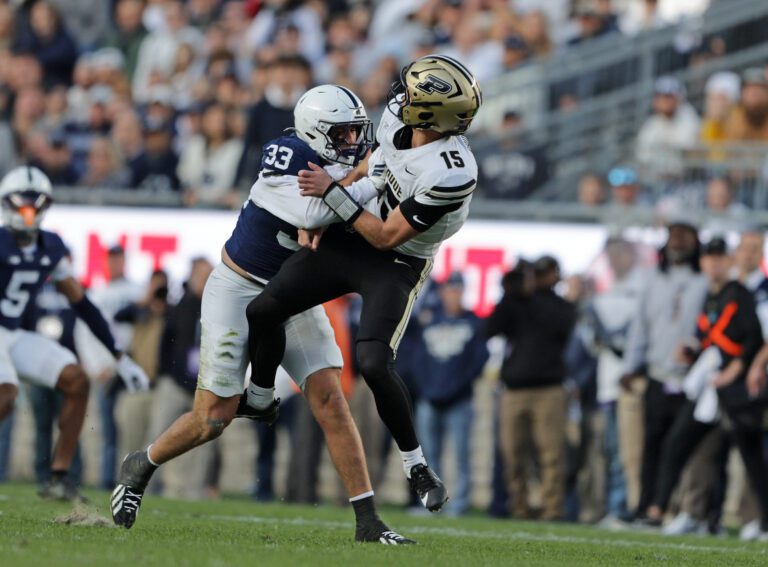
Penn State returned to the win column to close out the month of October, downing Purdue 31-17 in Beaver Stadium on Saturday.Stories You MissedPenn State’s Matt Campbell Is Not Sleepless […]
Can Penn State Win Out? It Would Help Future Payrolls Grow Forward
Four games in 22 days. Penn State’s season has come to that. Nittany Lion football has reached an inflection point. Again.Stories You MissedPenn State’s Matt Campbell Is Not Sleepless About […]


